Friday, 12 December 2014

Techmistory.com is the emeging technical blog


Techmistory.com is one of the emerging blog for technical news and updates for the connected generation .

This blog has been growing significantly over past one year and has some great internet presence.

Go check it out and experience the best.

Saturday, 20 October 2012

Sony Xperia tipo Review

Sony Xperia tipo Review


As the A listers of the mobile industry, launch some of their high-end creations in this season. The dual-SIM market has plenty of buyers. But is anyone paying attention? Well, Sony is and has thus launched its tipo Dual, that runs on Android 4.0. Here’s an interesting equation = A dual SIM + by Sony + on Android 4.0 + that if you bargain hard, it can be yours for Rs. 9500/-.The Tipo is essentially the baby smartphone in the Sony Xperia range of devices. In India, this is the first entry-level Xperia smartphone. In a price segment where smartphones clearly look, feel and perform with the “budget” aspect in mind, the Tipo isn’t being held back by that.


First impression : a basic Android phone, but despite the low price, Sony has not considerably pulled down the quality of the product. But yes, we do wish the screen had a better resolution, more real estate. There is a micro USB slot at the side similar to the tipo. The camera is also a similar 3.2MP fixed focus shooter without flash. The power button and 3.5mm audio jack are at the top. The battery in tipo dual has as much fuel, as the tipo phone. The battery can give upto 5 hrs of talktime. Wish there was more battery to support longer talk time with two SIMs in one phone.


Build & Design
The two aspects of the Tipo – the tiny form factor and the surprisingly good finish. Up front, the 3.2-inch display does look rather small. The black bezel wraps around the display, with three touch sensitive keys – return, home and options. Where the bezel finishes is where the plastic colour body starts, and runs all around the sides and the back. Also read, First Impressions: Sony Xperia Tipo

Features & Specifications
This is a pretty unassuming smartphone on the spec sheet – single core 800MHz processor, 512MB RAM, 3.2-inch display and 2.5GB internal storage with a microSD card slot. Very basic specs, and even some phones like the Huawei Ascend G300 have more powerful processors and more RAM. However, we not judge the Xperia Tipo till the time we actually describe the performance of the device as a whole.

Performance
As the spec sheet suggested, the performance of the Xperia Tipo is very basic. Having said that, we need to specify that within its boundaries, it does brilliantly well. If you are opening a maximum of 3 basic apps (social networking, Whatsapp and IM – the likes) at the same time, you will not face any slowdowns. However, any more and there will be a serious performance dip that will impact app opening times as well as even the UI. Interestingly, Timescape doesn’t slow down the performance, and will not feel sluggish. This is quite the opposite of what the Sense UI does on budget HTC phones. Full marks to Sony for optimizing the UI rather well.


Friday, 12 October 2012

Samsung unveils Galaxy S III Mini

Samsung unveils Galaxy S III Mini


Samsung today unveiled the Galaxy S III Mini, the smaller and toned-down iteration of its current flagship smartphone, in Germany. The all-new device features the 'pebble' design language that the Galaxy S III and Note II have.

Tuesday, 9 October 2012

htc one x+ review

htc one x+ review


Specs

General 2G Network GSM 850 / 900 / 1800 / 1900
3G Network HSDPA 850 / 900 / 1900 / 2100
HTD-SCDMA/ TD-HSPA 1900 / 2100 - HTC One XT
Announced 2012, February
Status Available. Released 2012, May
Body Dimensions 134.4 x 69.9 x 8.9 mm
Weight 130 g
- Touch-sensitive controls
Display Type Super IPS LCD2 capacitive touchscreen, 16M colors
Size 720 x 1280 pixels, 4.7 inches (~312 ppi pixel density)
Multitouch Yes
Protection Corning Gorilla Glass
- HTC Sense UI
Sound Alert types Vibration, MP3, WAV ringtones
Loudspeaker Yes
3.5mm jack Yes
Memory Card slot No
Internal 32 GB (26 GB user-available) storage, 1 GB RAM
Data GPRS Yes
EDGE Yes
Speed HSDPA, 21 Mbps; HSUPA, 5.76 Mbps
WLAN Wi-Fi 802.11 a/b/g/n, Wi-Fi Direct, DLNA, Wi-Fi hotspot
Bluetooth Yes, v4.0 with A2DP
NFC Yes
USB Yes, microUSB (MHL) v2.0
Camera Primary 8 MP, 3264x2448 pixels, autofocus, LED flash, check quality
Features Simultaneous HD video and image recording, geo-tagging, face and smile detection
Video Yes, 1080p@24fps, stereo sound rec., video stabilization, check quality
Secondary Yes, 1.3 MP, 720p
Features OS Android OS, v4.0 (Ice Cream Sandwich), upgradable to v4.1
Chipset Nvidia Tegra 3
CPU Quad-core 1.5 GHz
GPU ULP GeForce
Sensors Accelerometer, gyro, proximity, compass
Messaging SMS (threaded view), MMS, Email, Push Email
Browser HTML, Adobe Flash
Radio Stereo FM radio with RDS
GPS Yes, with A-GPS support
Java Yes, via Java MIDP emulator
Colors Gray, White
- MicroSIM card support only
- Beats Audio
- Active noise cancellation with dedicated mic
- Dropbox (25 GB storage)
- TV-out (via MHL A/V link)
- SNS integration
- MP4/H.263/H.264/WMV player
- MP3/eAAC+/WMA/WAV player
- Google Search, Maps, Gmail,
YouTube, Calendar, Google Talk
- Document viewer/editor
- Voice memo/dial/commands
- Predictive text input


Standard battery, Li-Po 1800 mAh


Review

The One X+ is a step change from the original, but like the Sensation to XE transition, this is more incremental than complete overhaul.With One X -- which dropped the global model's quad-core Tegra 3 with 32GB of storage in favor of a dual-core Snapdragon S4 with only 16GB of flash for the sake of LTE -- One X+ gives you the best of both worlds: NVIDIA's 1.7GHz quad-core Tegra 3 AP37 SoC combined with Qualcomm's MDM9215m GSM/EDGE/UMTS/HSPA+/LTE radio plus 32 or 64GB of built-in storage.


The main change visually is the new matte finish, which, well, seems to make the black a little bit darker.On top of that are new red accents adorning the softkeys on the front and around the camera - once again, very reminiscent of the HTC Sensation XE with its Beats Audio branding.


The HTC One X+ is likely a contender for the best Android smartphone in the world, but only if HTC can step up its marketing efforts to make the handset more appealing to customers. HTC has long had a reputation of making nerd-friendly smartphones, which may not be as attractive to more mainstream user that are more interested in Samsung and Apple devices.

The handset will be available around this November, and will face stiff competition from the LG Optimus G, as well as the slew of Windows Phone 8 products. 

Wednesday, 3 October 2012

Samsung Galaxy Camera

Samsung Galaxy Camera


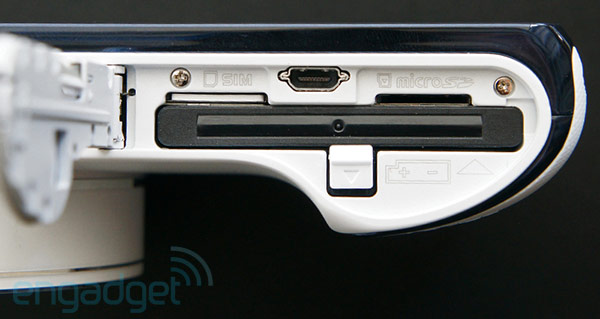
The Samsung Galaxy Camera has a massive 4.77-inch Super Clear LCD display on the back. The advantage this brings is that it adds a glorious big-screen composition to the world of cameras.  It's early days for the new device and we found it wasn't as swift as the latest Android phones in terms of operating the UI.There are also plenty of native sharing and sorting options, including a device-wide search tool that lets you locate shots based on a face tag, location or time. Best Group Pose will automatically select the ideal portrait of you and your friends, while Share Shot lets you use WiFi Direct to send content to your buds with Galaxy cameras and smartphones in realtime.  


Lying at the core of the Samsung Galaxy Camera is a 1.5GHz quad-core processor, so there's no lack of power. It's also running Android 4.1 Jelly Bean, the latest software from Google, so it's bang up to date.


Without standard phone functionality, the Galaxy Camera won't replace your smartphone -- not to mention that the rather bulky form-factor would end up being quite a nuisance -- but if you don't make calls, this could theoretically be the only device in your (rather spacious) pocket.

Tuesday, 2 October 2012

Sony Xperia tipo

Sony Xperia tipo


Specification

General 2G Network GSM 850 / 900 / 1800 / 1900
3G Network HSDPA 900 / 2100 - ST21i
HSDPA 850 / 1900 / 2100 - ST21a
Announced 2012, June
Status Available. Released 2012, August
Body Dimensions 103 x 57 x 13 mm
Weight 99.4 g
Display Type TFT capacitive touchscreen, 256K colors
Size 320 x 480 pixels, 3.2 inches (~180 ppi pixel density)
Multitouch Yes
Protection Scratch-resistant glass
Sound Alert types Vibration; MP3 ringtones
Loudspeaker Yes
3.5mm jack Yes
Memory Card slot microSD, up to 32 GB
Internal 2.9 GB storage (2.5 GB user available), 512 MB RAM
Data GPRS Up to 86 kbps
EDGE Up to 237 kbps
Speed HSDPA, 7.2 Mbps; HSUPA, 5.76 Mbps
WLAN Wi-Fi 802.11 b/g/n, Wi-Fi hotspot
Bluetooth Yes, v2.1 with A2DP
USB Yes, microUSB v2.0
Camera Primary 3.15 MP, 2048x1536 pixels
Features Geo-tagging
Video Yes, VGA
Secondary No
Features OS Android OS, v4.0.4 (Ice Cream Sandwich)
Chipset Qualcomm MSM7225AA
CPU 800 MHz Cortex-A5
GPU Adreno 200
Sensors Accelerometer, proximity, compass
Messaging SMS (threaded view), MMS, Email, IM, Push Email
Browser HTML, Adobe Flash
Radio Stereo FM radio with RDS
GPS Yes, with A-GPS support
Java Yes, via Java MIDP emulator
Colors Classic Black, Classic White, Deep Red, Navy Blue
- SNS integration
- MP4/H.264/WMV player
- MP3/WMA/WAV/eAAC+ player
- Organizer
- Document viewer
- Voice memo/dial
- Predictive text input
Battery Standard battery, Li-Ion 1500 mAh

Saturday, 29 September 2012

Nikon D4 review

Nikon D4 review


Specifications     
Sensor


16 MP FX (24 x 36mm) CMOS.
4,928 x 3,280 pixels (16 MP) native LARGE.
3,696 x 2,456 (9 MP) MEDIUM.
2,464 x 1,640 (4 MP) SMALL.
Also crops of 1.2x (20 x 30mm), 1.5x DX (16 x 24mm) and 5:4 professional (24 x 30mm) from the above.

ISO
ISO 100 - 12,800 in in full, half or third stops.
ISO 50 to ISO 204,800 available in stupid modes.

White Balance
Auto (2 types), incandescent, fluorescent (7 types), direct sunlight, flash, cloudy, shade, preset manual (up to 4 different settings can be saved and recalled), 2,500 K to 10,000 K in 10K intervals; all with fine-tuning!

Frame Rates
10 FPS with full metering and autofocus for each frame.
(11 FPS with locked focus and exposure).

AF
CAM3500FX sensor.
51 AF points (15 are cross-type sensors).
Works with auto- and manual-focus lenses f/5.6 and faster.
11 of these sensors will work with lenses as slow as f/8.
AF range is rated down to LV-2 with any lens. (SLR AF systems have never used the full speed of lenses; they look through anulii equivalent to about f/8 regardless of lens speed.)

Finder
100% coverage.
0.7x magnification (50mm at infinity).
18mm eyepoint.
-3 to +1 diopters.
Live-View LCD.

Meter
Nikon invented the Matrix Meter, the color meter and the 3D meter, which is what really matters.
For the first time, Nikon is wasting their time by upping the resolution of the meter sensor for marketing purposes to 91,000 RGB pixels.
It also measures flash at this resolution.


Shutter
Kevlar/carbon fiber-composite, rated 400,000 shots.
1/8,000 - 30 seconds in full, half or third stops.
Bulb.
X 250 flash sync.
"Silent" mode.

Flash
1/250 flash sync.
i-TTL flash control using the 91,000 pixel RGB sensor with the SB-910, SB-900, SB-800, SB-700, SB-600 and SB-400.
Won't meter flash with other flash guns.

Lens Compatibility
Built-in motor and AI coupling feeler, so all AF lenses work, as well as classic AI, AI-s and AI-P manual-focus lenses all work as well as they do on all of Nikon's better DSLRs.

File Formats
JPG.
NEF 12 or 14 bit, uncompressed, or lossy or lossless compressed.
NEF + JPG.
TIFF.
Video: H.264/MPEG4 stored in .MOV files.

Storage and Data
One CF slot (UDMA 7), and one XQD slot. (NOT two CF slots).
XQD cards are bogus — Lexar doesn't make them, and I don't know about SanDisk. Therefore, the XQD slot is largely useless. I'll only use Lexar and SanDisk cards. Got a XQD reader? I didn't think so.
USB.
HDMI (mini-C).
RJ-45 Ethernet.

Wireless
WT-4 or WT-5A/B/C/D.
 
Video
All of these variations have two different file size (quality) options:
1,920 × 1,080 (full or cropped) at 29.97p, 25p and 23.976p.
1,280 × 720 at 59.94p, 50p, 29.97p and 25p.
640 × 424 at 29.97p and 25p.
H.264/MPEG4 stored in .MOV files.
24–36,000x time-lapse mode.

Audio
Mono internal mic.
3.5mm jack for external stereo mic, with power.
Auto and manual level control.
Linear PCM recording.
3.5mm stereo output jack.
 
LCD
3.2" (8cm) LCD.
921,000 dots.
Auto brightness control.
Live View.

Power
EN-EL18 battery.
MH-26 charger.
Optional EH-6b AC adapter and EP-6 connector.
CR1616 lithium coin cell for the clock, rated 2 years. This is new for Nikon; Nikon used to use a more expensive internal, permanent rechargeable battery that never needed to be changed.
 
Size
6.3 × 6.2 × 3.6 inches.
160 × 156.5 × 90.5 millimeters.

Weight
47.165 oz. (1,337.2 g), actual measured with battery and card and lugs, but no strap or lens.
Nikon specifies 47.3 ounces (1,340 g or 2 pounds, 15.3 oz.) with battery and XQD memory card.
Nikon specifies 41.6 ounces (1,180 g or 2 pounds, 9.6 oz.), stripped naked.

Serial Number
Laser-engraved on plate on bottom.

USA Version
Delineated with a yellow Nikon USA sticker inside battery chamber.

Environmental
0 ~ 40ºC (32 ~ 104ºF), operating.
85% RH or less, non condensing.

Included
D4 body
Rechargeable Li-ion Battery EN-EL18
Battery Charger MH-26
USB Cable UC-E15
Camera Strap AN-DC7
Body Cap BF-1B
Accessory Shoe Cover BS-2
Eyepiece DK-17
Battery Chamber Cover BL-6
USB Cable Clip
ViewNX 2 CD-ROM

Performance
The Nikon D4 is one of the fastest cameras and one would have had the pleasure of shooting with, though it falls short of perfection. It powers on, focuses, and shoots almost instantaneously -- definitely faster than our ability to measure it confidently. It seems to perform every operation in our tests in about 0.2 second: time to focus and shoot in both bright and dim conditions, as well as two sequential shots in raw, JPEG, and even TIFF. We clocked continuous shooting at 9.8 frames per second for JPEGs, but in practice that held as well for long bursts of raw+JPEG, too.
The D4's autofocus system is mostly excellent, locking quickly and usually accurately in both single and burst shooting, for fixed subjects as well as while panning. The dynamic and tracking focus options still tend to get a little distracted by the background, but unlike some cameras the D4 maintains the display of the center point (when that's the setting) during continuous AF, which really helps. However, despite gaining a stop of sensitivity in low light, centerpoint autofocus at f2.8 remains more frustrating than I expect for a camera in this price range and with these specs -- especially one of which the single most important distinguishing characteristic should be speed. (The variations of AF point sensitivities are too complex to go into here. For a complete description, check out pages 75-76 of the PDF manual.) Also, the sluggish Live View autofocus just makes me sad.
One of the nice aspects of cameras in this class is the dual card slots; in the case of the D4, one CompactFlash and one XQD, a new technology that thus far has no other camera adopters. I've got mixed thoughts about its inclusion here. On the upside, it's fast -- a lot faster than SD at this point. But so is the 100MBps CF, and as far as I can tell you gain no in-camera performance improvements over that from it, and you lose compatibility. However, when using a USB 3.0 XQD reader the downloads are very fast.

Thursday, 27 September 2012

Touch-enabled ultrabooks to launch by 2013: Intel

Touch-enabled ultrabooks to launch by 2013: Intel
The world's largest semiconductor firm Intel will attempt to revolutionize computing in the next couple of years with increased impetus on "user experience."
 
 Times of India NEW DELHI: The world's largest semiconductor firm Intel will attempt to revolutionize computing in the next couple of years with increased impetus on “user experience.” Sanjay Vora, General Manager, Strategic Planning, PC Client Group, Intel Corp said …

Monday, 24 September 2012

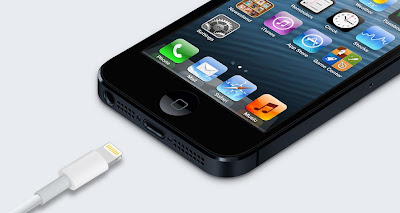
iPhone 5 review


iPhone 5 review


Build

The chassis because that is the only distinct visible change to differentiate it from its two previous family members. In hand the first thing you’ll notice is the weight, it’s the lightest iPhone ever.

First off, you're going to be shocked at how light this phone is. It's the lightest iPhone, even though it's longer and has a bigger screen. After a few days with it, the iPhone 4S will feel as dense as lead. At 112g, it’s 20% daintier than the iPhone 4S, 16% less butch than the Samsung Galaxy S3 and 14% lighter than the HTC One X. Reducing the SIM to weency, or ‘nano’, size has helped, minutely, as has making the shell out of anodised aluminium.

The brace of glass strips adorning the top and bottom of the rear give both the black/slate and white/silver models a premium feel but are actually employed to allow an uninterrupted phone signal.
Despite Keynote claims, the 7.6mm-deep iPhone 5 isn’t the thinnest smartphone in the world – the Huawei Ascend P1 S, Oppo Finder and ZTE Athena are all sub 7mm – but when the depth is combined with the weight, it feels sufficiently waif-like in the hand.
 Of course we want our mobile tech to be light and lithe, but what some people would now say that” we’ve loved about previous iGenerations is the weighty, industrial feel, the security of feeling something solid in your pocket” (no jokes) and knowing that, if it takes a knock, it’s not going to shatter into a billion plastic pieces.


Screen: The four-inch screen,  is Apple’s belated nod to the industry trend for bigger displays, and means the iPhone 5 now stands a proud 123.8mm tall – width remains the same at 58.6mm. The extra screen real-estate is welcome, though smaller-handed iPhone users might struggle to reach the standby button with a forefinger while holding it in a natural position and the power button was still be a little out of reach . The screen size lengthening is subtle, but, like the Retina Display, you're going to have a hard time going back once you've used it. The extra space adds a lot to document viewing areas above the keyboard, landscape-oriented video playback (larger size and less letterboxing), and home-page organizing (an extra row of icons/folders). Who knows what game developers will dream up, but odds are that extra space on the sides in landscape mode will be handily used by virtual buttons and controls. 

Camera

The rear iSight camera remains impressive, taking great pictures in bright conditions. There’s a bigger virtual camera capture button and video stabilisation seems to have improved.

It now detects faces and auto-focuses in video and allows you to capture stills while taking video. The video-compression algorithm has also improved, reducing the file-size of footage without any discernible reduction in quality, and making for friendlier email attachments.

Low-light image capture improvement was also discussed in the Keynote but we still experienced a fair bit of grain in our testing. The major improvement is with the front camera, which has been upgraded to 720p video, making FaceTime and Skype chats much clearer. Still shots are captured at 1.2MP, so not exactly archive-worthy.

The new Panorama mode is intuitive and produces great results. It doesn’t capture in landscape orientation, which feels counter-intuitive, but the speed at which it processes and pops out a pretty, panoramic shot is impressive.

Though, even with the wider screen, you still have to zoom right in to see what you’ve captured. And while competing phones have had this feature for a while, if anything’s going to be the new Instagram over the coming months, this is it.


iOS 6

The iPhone 5 comes with iOS 6 as standard. But, at this point it’s difficult to see where the unique differences are between it running on an iPhone 4S and iPhone 5.
Flyover, turn-by-turn navigation, Passbook, PhotoStream sharing, FaceTime over cellular, VIP Mailboxes, Facebook integration, Do Not Disturb, improved Siri, pre-determined text replies to phone calls, the list goes on.

Performance

Everything feels slightly slicker when navigating the phone. Apps appear to load quicker, video feels a touch smoother, video and image processing is definitely faster.

With the improved A6 processor now powering the visuals, our finger points straight at it, but it’s with new apps that we’ll really see the power of the chip take hold. Real Racing 3 (or any other A6-optimised game) wasn’t available when penning this review, so we’ll have to wait for developers to do their thing before witnessing any major power increase.

from anandtech.com